Firelight on the Scale of The Odyssey: When Existing Tools Fell Short, Hoyte van Hoytema Created a New One
Realizing his vision for Christopher Nolan’s film required a custom LED solution. Yuji’s teams in America and China took on the challenge: developing, manufacturing and delivering nearly 3,000 panels for his Pyrahedron lights in just forty days.
What makes firelight convincing on camera?
What makes a fixture look like fire—and illuminate a scene?
What does it take to reproduce that firelight consistently at scale?
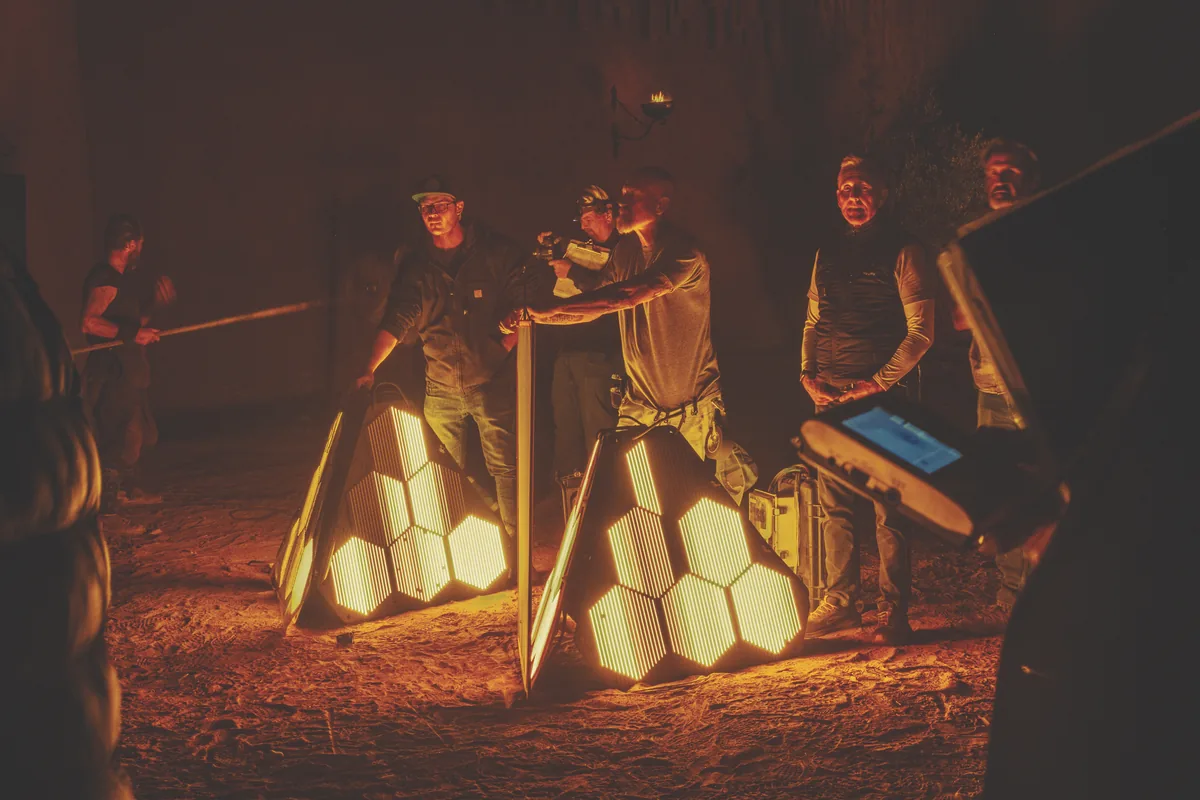
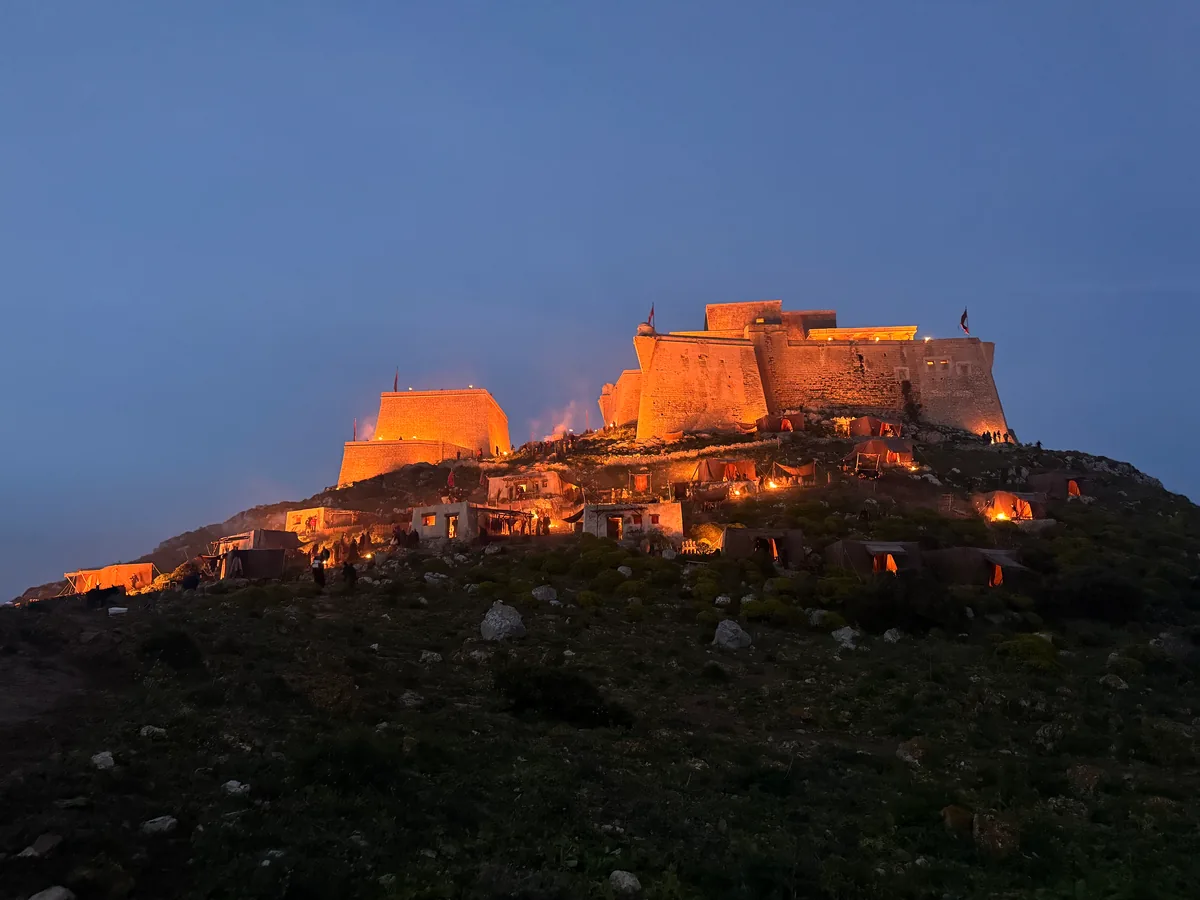
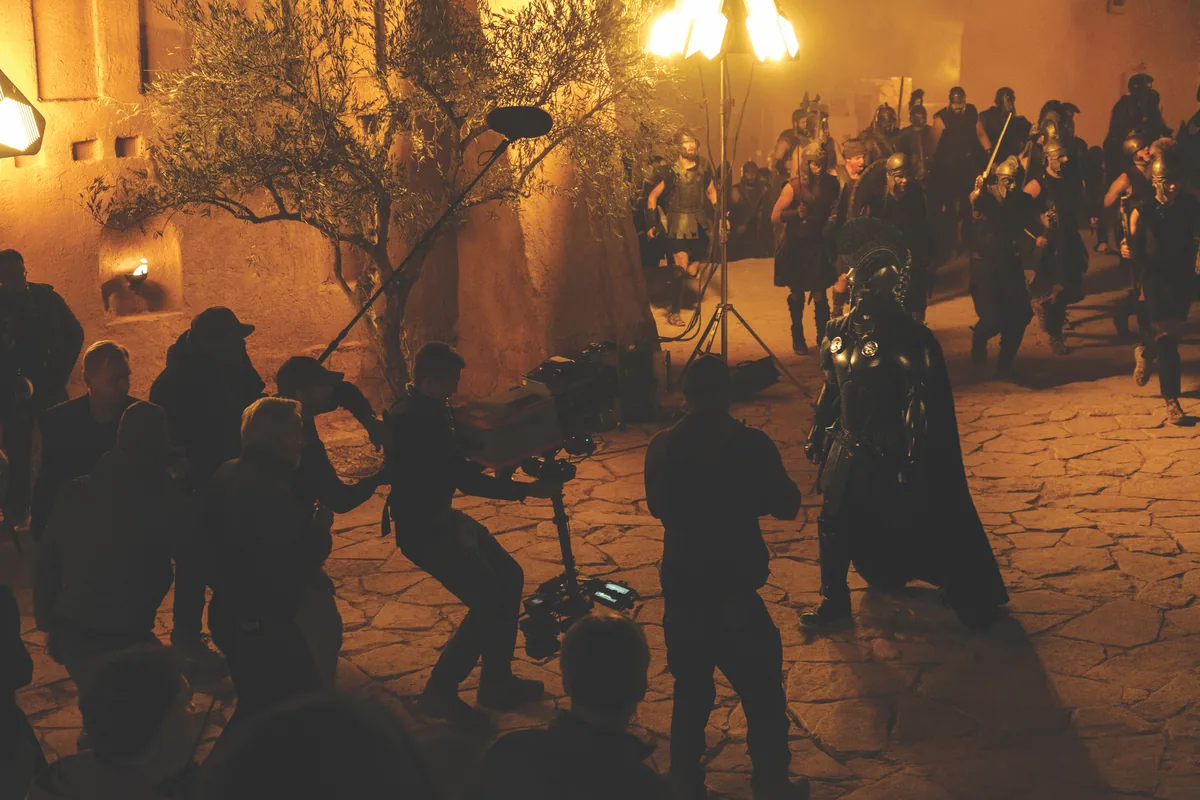
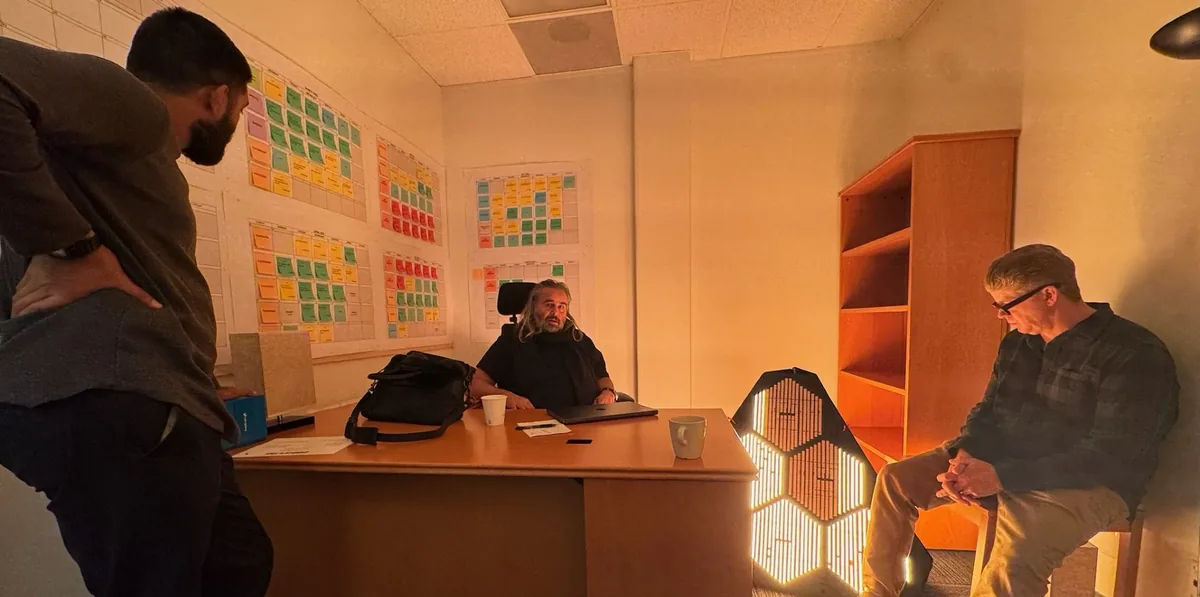
Hoyte van Hoytema envisioned Troy engulfed in fire, with firelight extending beyond the frame so he could move the camera freely through the scene. Achieving that vision with real flames alone posed practical and safety challenges. Rather than let those constraints define the scene, Hoyte set out to develop a new lighting tool that could deliver the firelight he envisioned, assembling a team to bring the Pyrahedron to life.
When Liao Zhang and I first spoke with Hoyte and executive producer Thomas Hayslip on November 25, 2024, the team already had a working prototype. Yuji’s task was to develop custom LEDs and printed circuit boards that met the crew’s requirements and could be manufactured at scale. More than six million LEDs would go into the panels, each needing to meet the agreed specifications.
Hoyte remained closely involved throughout, working directly with Liao and me on the LED development. Michael Lowrance contributed his expertise in fixture fabrication, and Noah Shain in lighting control. Ramin Shakibaei helped keep the work moving, while gaffer Adam Chambers stepped in when progress stalled.
Defining the light of fire
The prototype already embodied Hoyte’s vision for the firelight. Our task was to translate that reference and the crew’s requirements into measurable specifications for LED development, while identifying opportunities to improve performance or efficiency.
Working from that foundation, we also proposed alternatives for the crew to test. Firelight can take on different hues, and similar-looking sources can have different spectra. Chromaticity describes the color of the light itself; its spectrum influences how skin, costumes and scenery are recorded on camera. These distinctions gave us several directions to explore while staying within the character of light Hoyte wanted.
Our experience in firelight replication, spectral development, measurement and manufacturing helped us narrow the options early, giving the crew meaningful choices while preserving time for testing and production.
Developing the LEDs and PCB
Those optical targets were part of a larger set of requirements: the LEDs had to work within a tool designed for the crew’s way of filming. Ramin Shakibaei describes why that distinction mattered:
“In film, we are concerned with specific parameters of our tools and their relation to the very specific craft of filmmaking which are not necessarily the same parameters that light manufacturers are concerned with.”
— Ramin Shakibaei, best boy
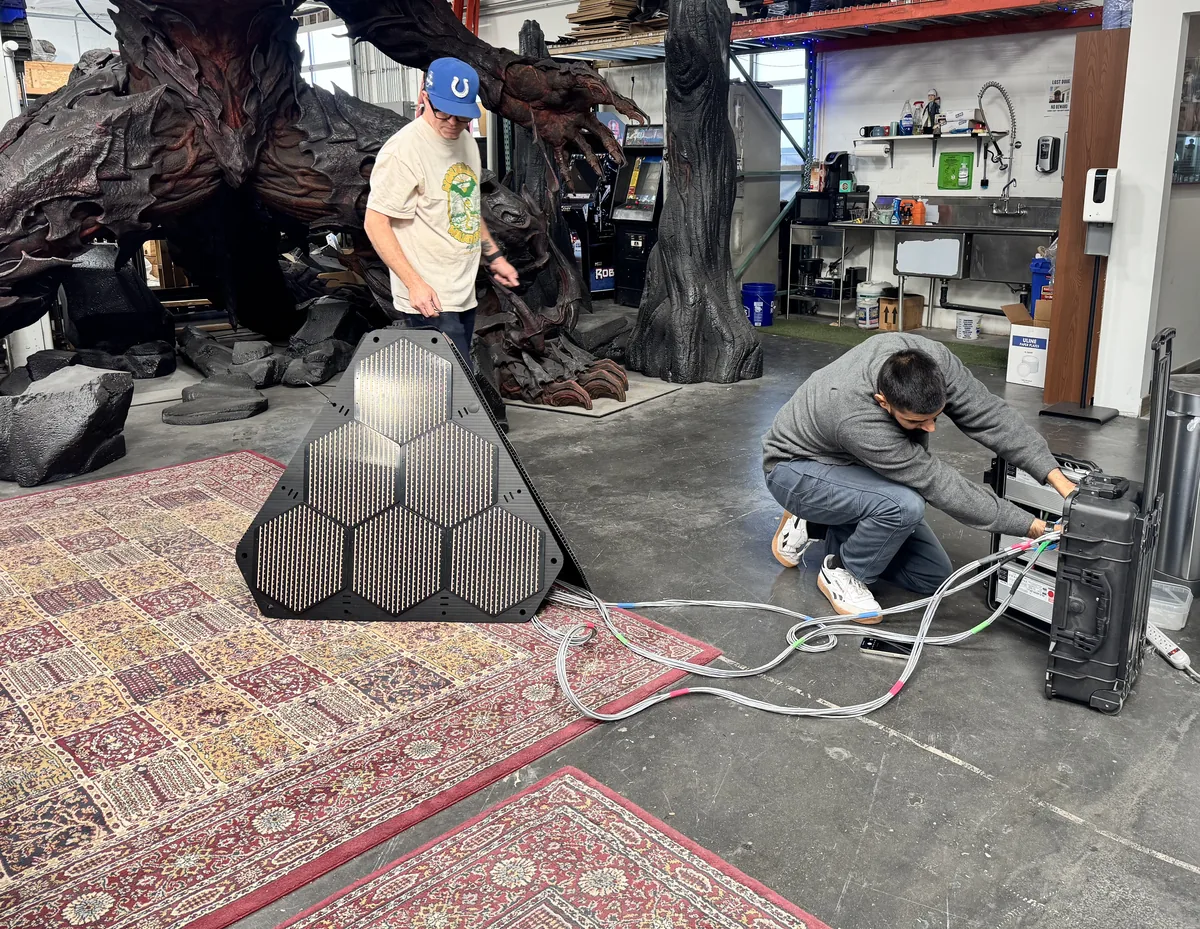
The Pyrahedron combined the functions of a low-resolution screen and a lighting fixture: it had to reproduce the changing patterns of fire while providing enough light for filming.
For Noah Shain, this meant creating credible flicker while maintaining enough light for the exposure. The response had to be smooth so the effect would not distract the viewer. He used video clips of real fire to generate the DMX control signal.
“It had to be real…it couldn’t be ‘movie fire’.”
— Noah Shain, lighting console programmer
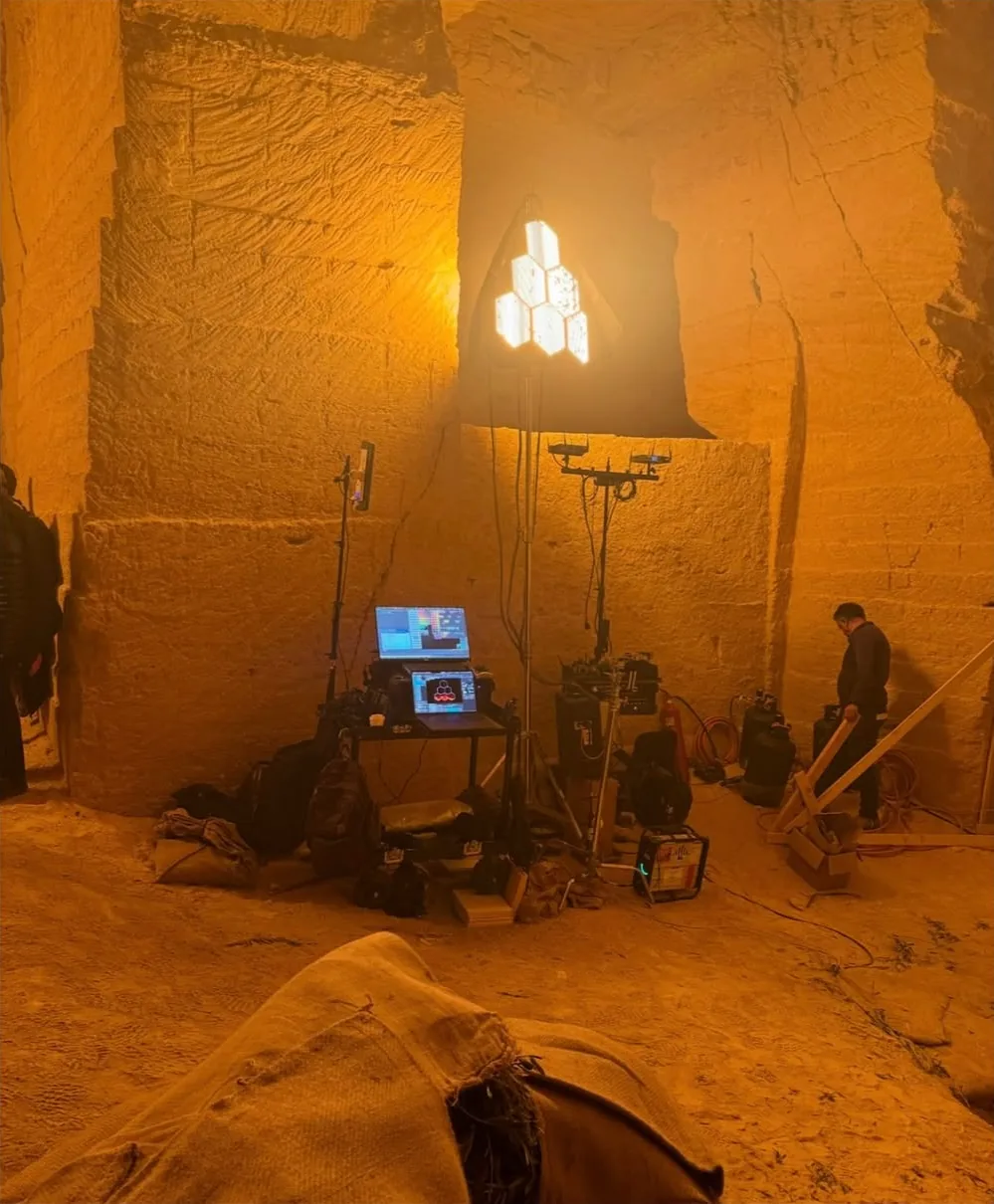
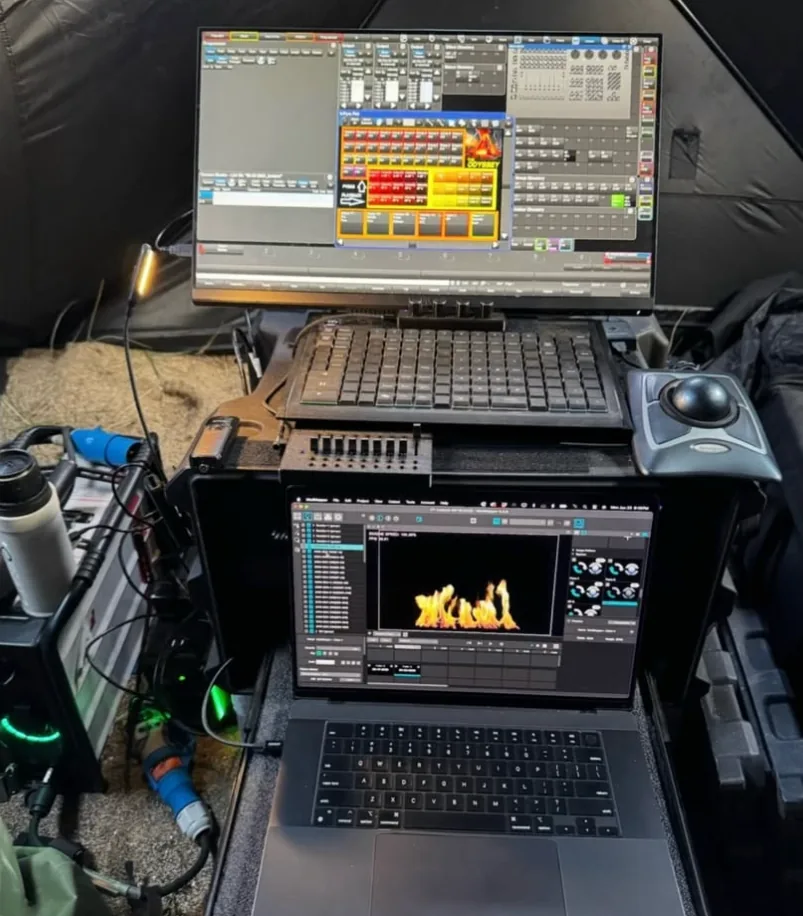
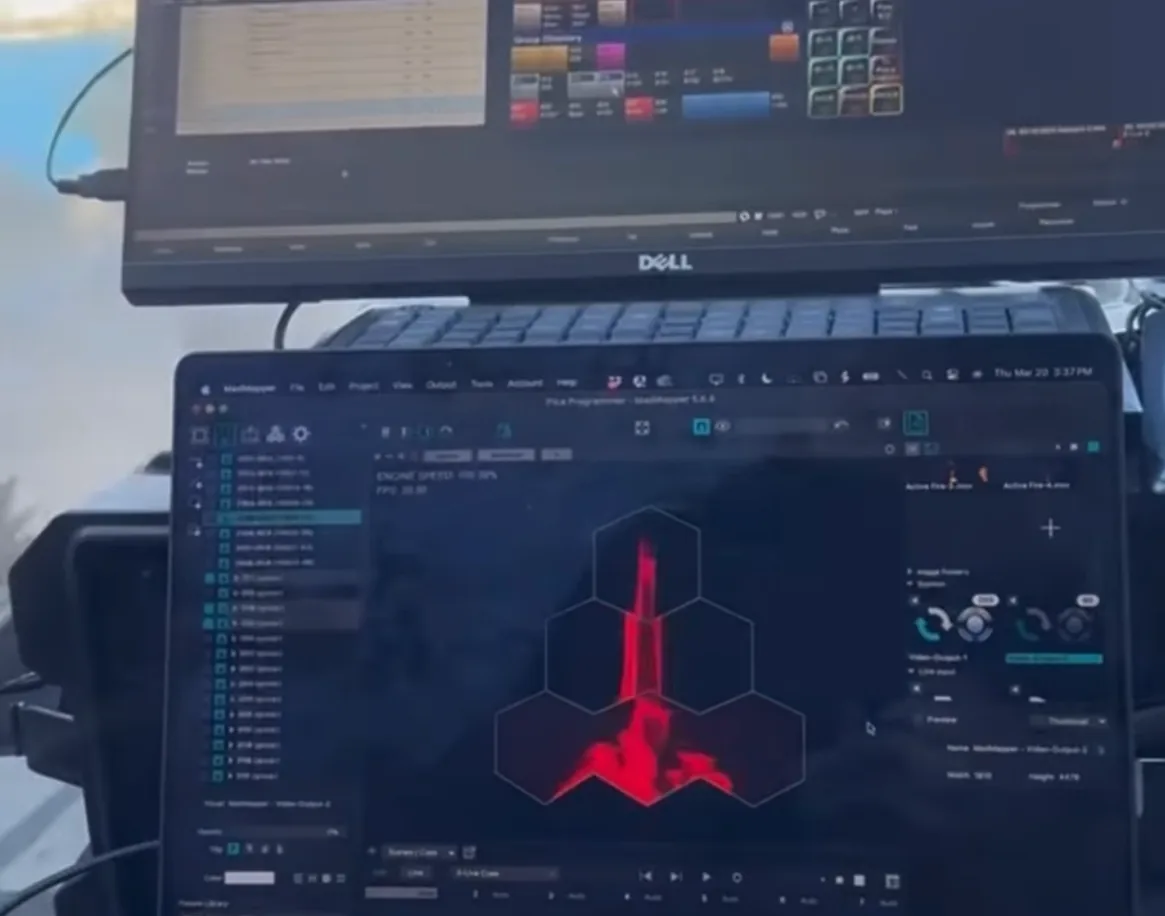
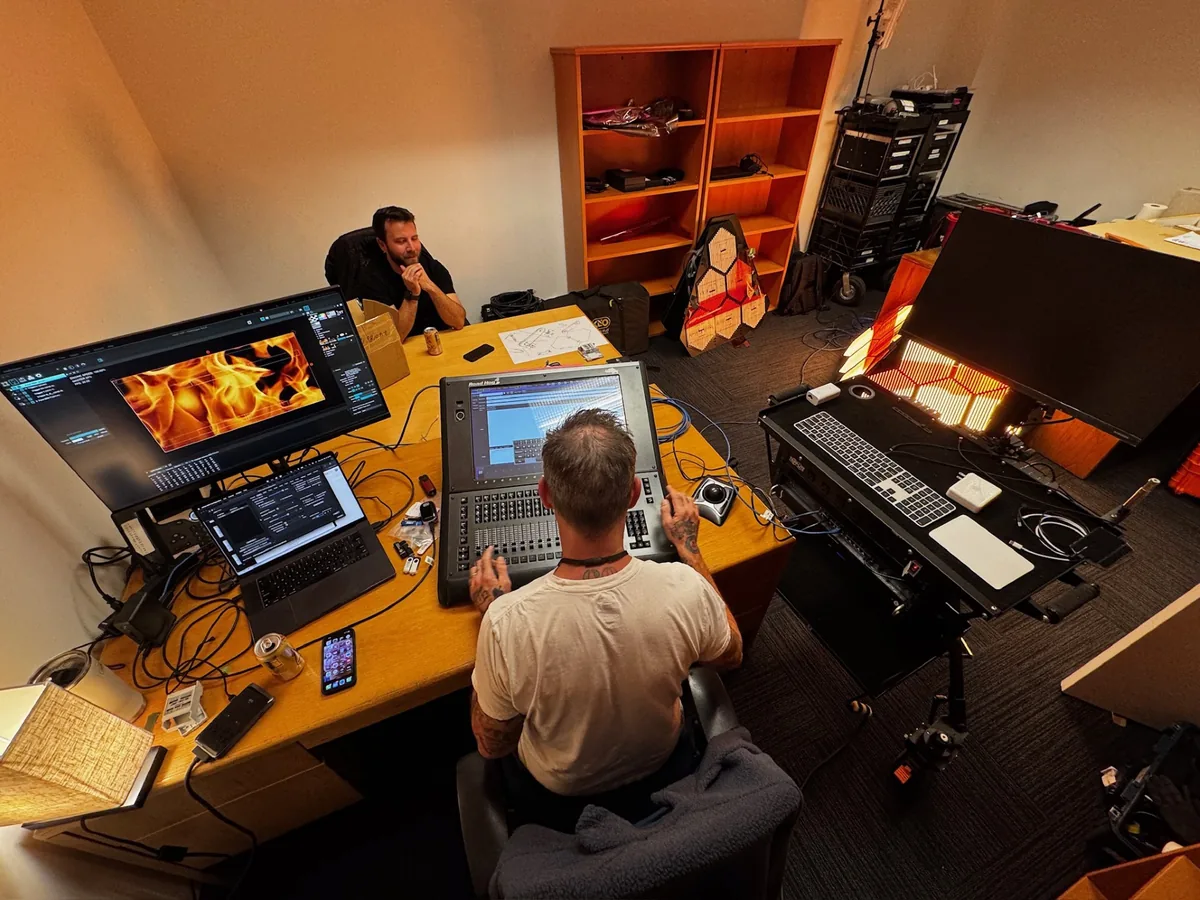
Yuji’s LEDs and PCB had to serve both functions. Component spacing and electrical connections had to support the changing fire pattern, while the available power limited how much light we could produce.
Improving color rendition can reduce luminous efficacy: at the same electrical power, a source may produce fewer lumens. The phosphor—the material that converts light from the LED chip into other wavelengths—was central to this balance. Its composition and concentration affect both the spectrum and efficiency. We developed the LED design and phosphor formulation together to achieve the required spectrum and color rendition while maximizing light output.
Alongside a version based on the original sample, we developed a warmer alternative for evaluation, including the possibility of mixing the two sources. Each option required samples to be manufactured, measured, tested and approved.
The development work also had to fit the crew’s assembly plans. The Pyrahedron was custom-built, from its light source to its controls and mechanical structure. Michael had considered using LED ribbon for the lighting assembly. Yuji’s ability to manufacture boards populated directly with LEDs simplified that part of the build, freeing him and the crew to concentrate on the other systems.
“This allowed me to focus completely on the control system and final fabrication design.”
— Michael Lowrance
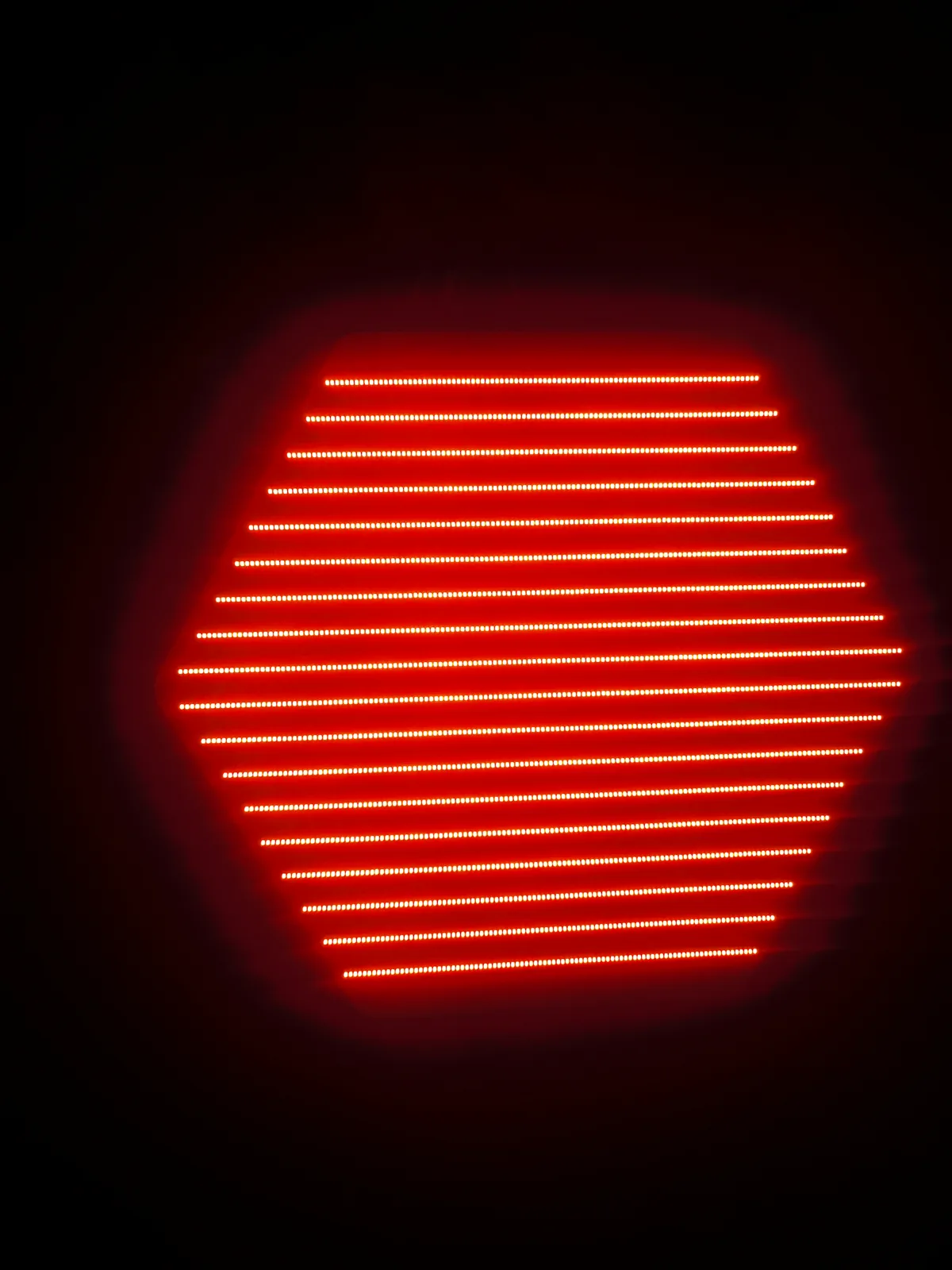
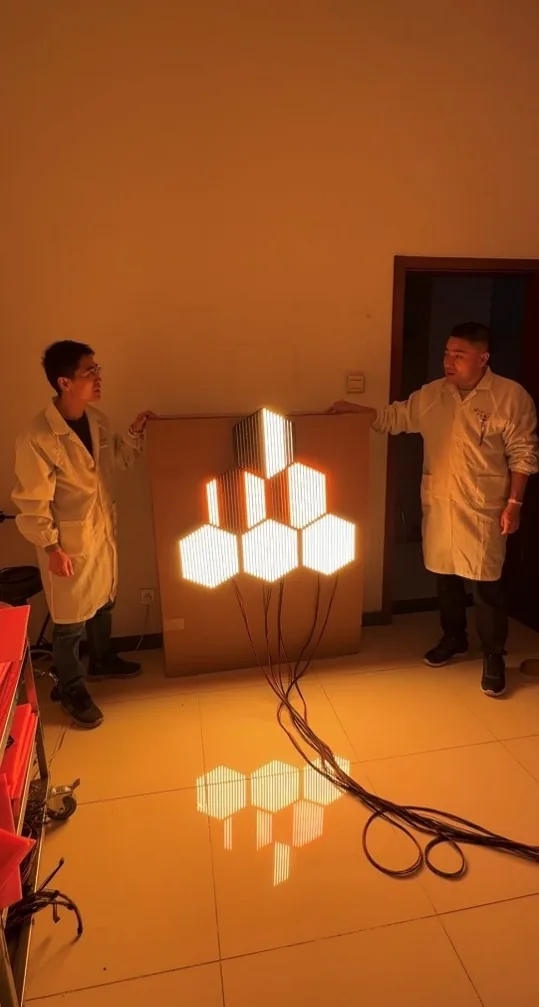
With development and preparations for assembly moving in parallel, decisions could not wait. Engineers relied on feedback from the crew, and suppliers on approval to proceed. A few hours without an answer could cost days in the schedule.
Liao once sent a message at 5:43 a.m.; Noah and Hoyte replied almost immediately. Michael answered questions late into the night. That responsiveness kept the work moving between our teams in America and China.
From approved samples to production
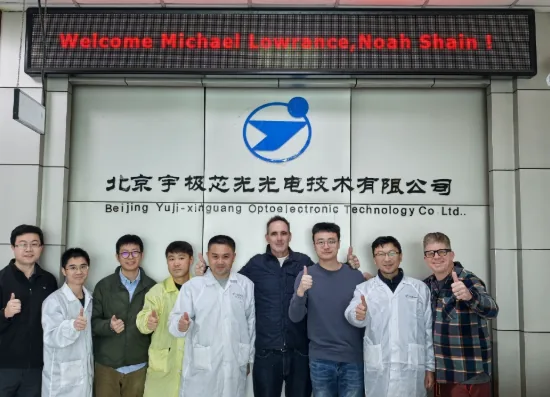
By day fifteen, Noah and Michael were in Beijing, reviewing the samples with Daniel Han and the Yuji China team. They came to finalize the colors, check color accuracy and confirm sufficient output at working distances. “Yuji delivered on all counts,” Noah says.
The approved samples became the reference for production. The next task was to reproduce their performance across the full order. Because the system was modular, panels had to match in color and output and respond consistently as the crew varied the firelight.
That required electrical as well as optical consistency. LED binning—sorting components by measured characteristics—covers chromaticity, light output and forward voltage. Matching forward voltage helps control electrical variation; its effect on brightness and dimming depends on the drive circuit. Optical and electrical consistency therefore had to be considered together with the fixture’s power and control design.
Yuji’s manufacturing and selection processes controlled variation at the component level, reducing the need for subsequent correction and giving the crew a consistent starting point for shaping the effect.
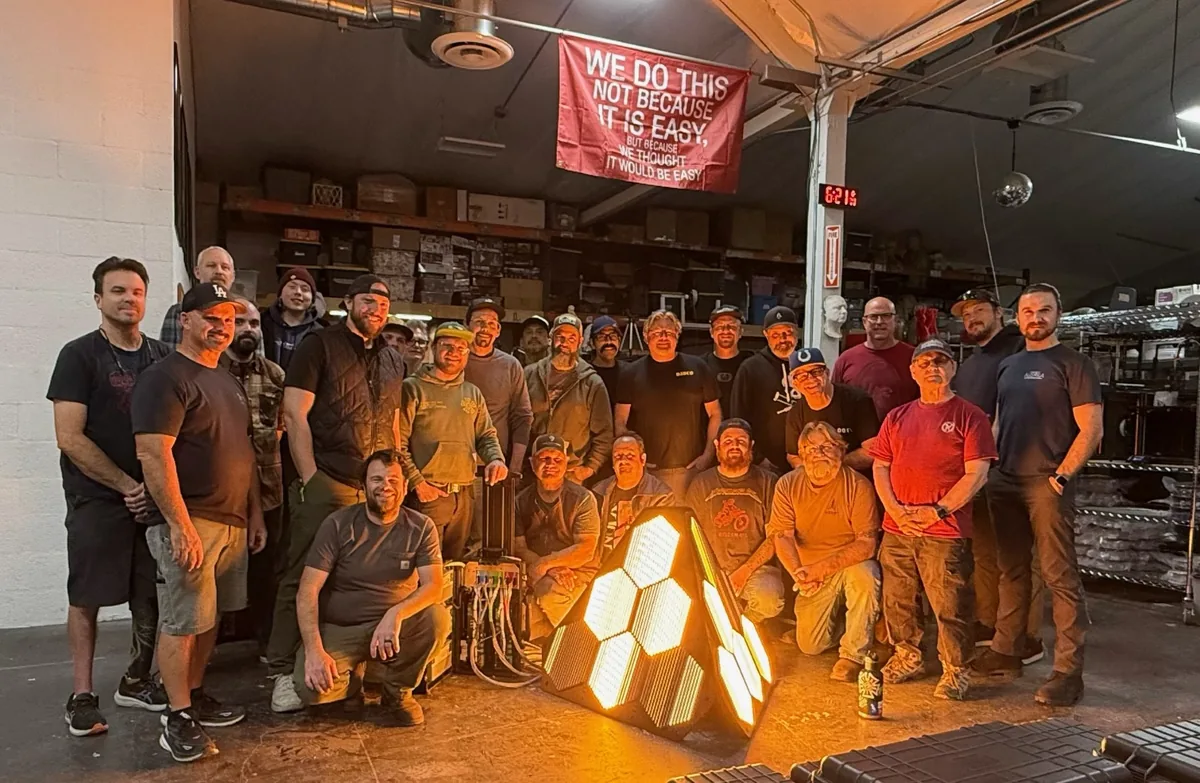
Alongside panel production, we worked closely with the crew on connectors and cabling to integrate the light sources with the fixtures and control systems. By January 4—forty days after our first call—the full order of nearly 3,000 custom LED panels and associated wiring had arrived. Michael reports that he, his partner Zac Sleeth and a large crew of skilled lighting technicians assembled 165 complete Pyrahedrons.
Firelight on set
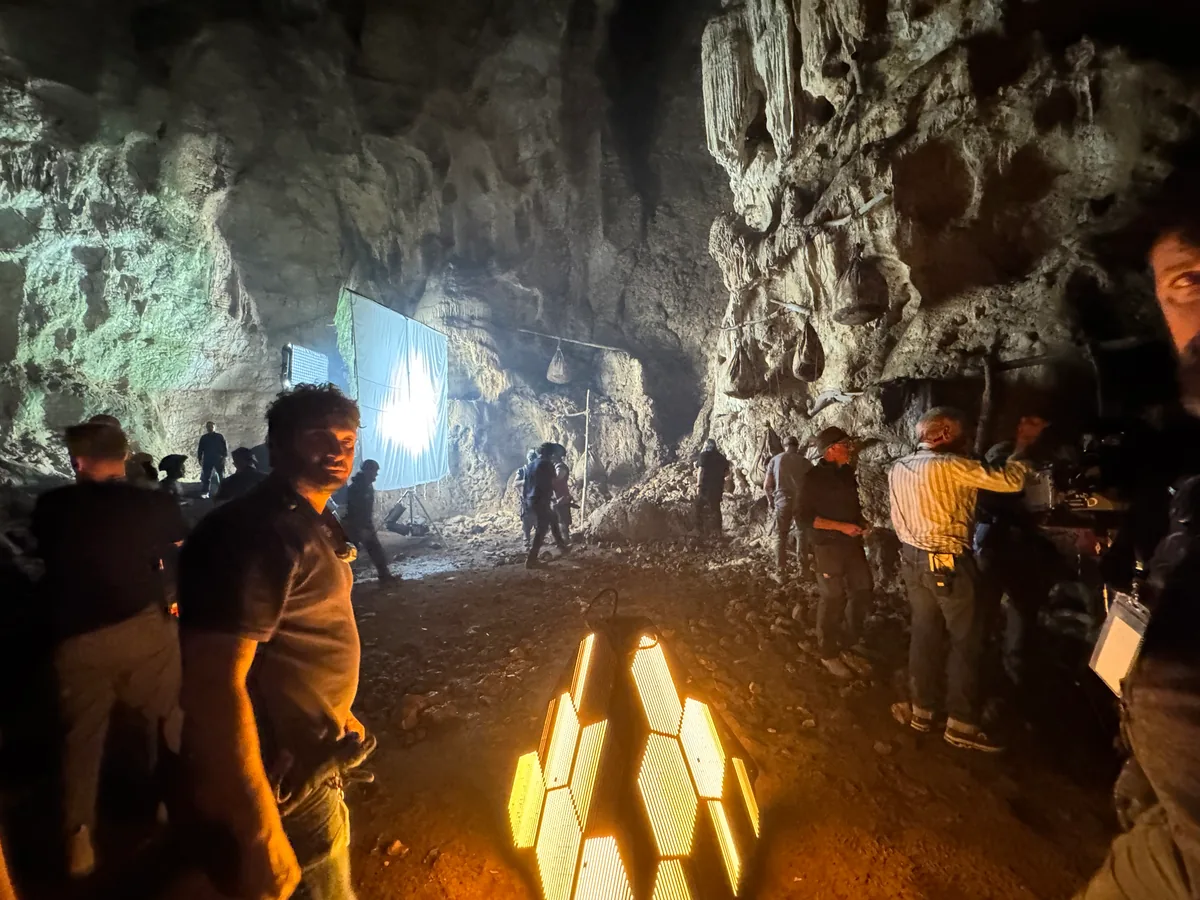
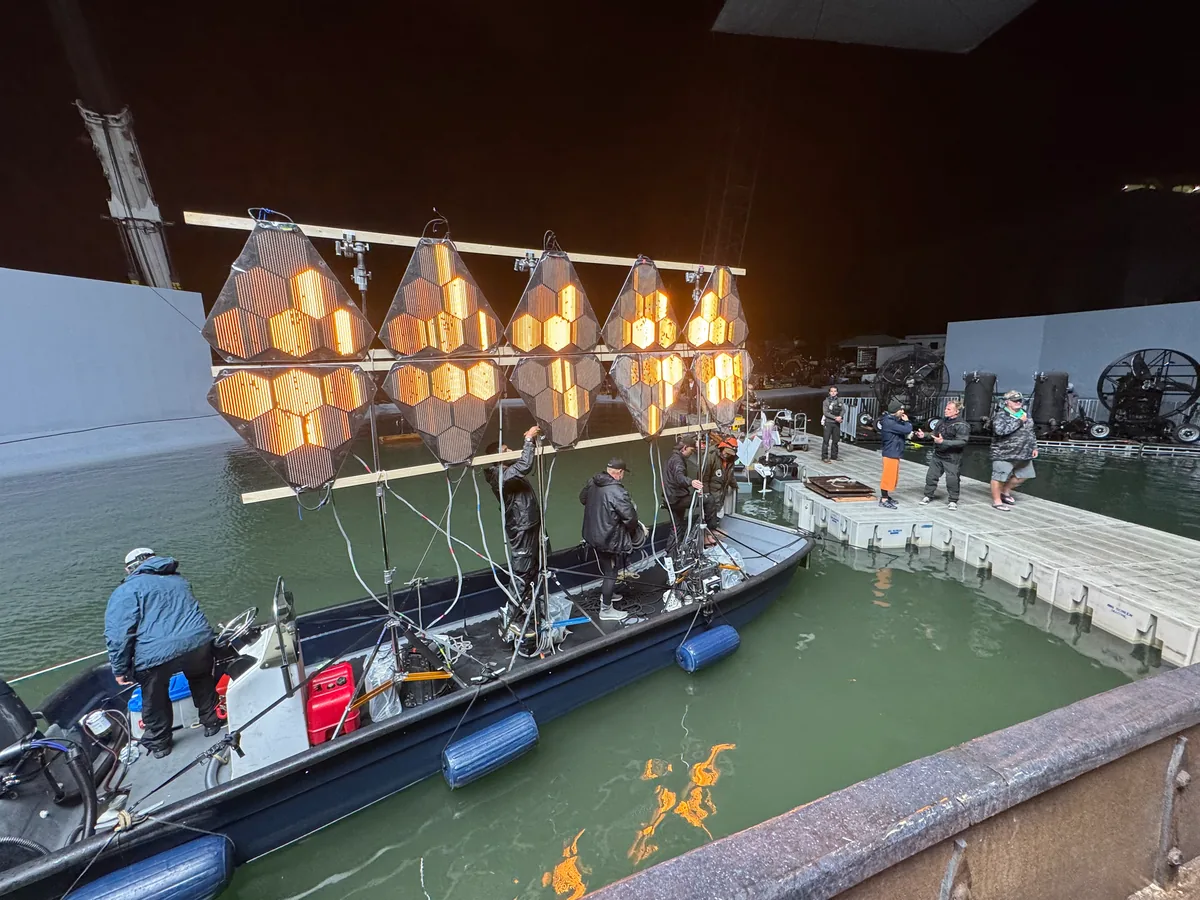
Developed for the challenge of Troy, the Pyrahedrons proved useful far beyond that sequence. Hoyte told American Cinematographer that they “became our go-to lighting fixture for all of the night shoots.”
Adam Chambers describes what mattered across the film’s fire scenes:
“What mattered was getting believable firelight, not simply making a source warm or orange. The light needed to render skin, costumes and the environment convincingly, with enough output and consistency to work across the setup.”
— Adam Chambers, gaffer
That foundation, he explains, allowed the crew to concentrate on the movement and character of the firelight—how it played across a face or moved through a space.
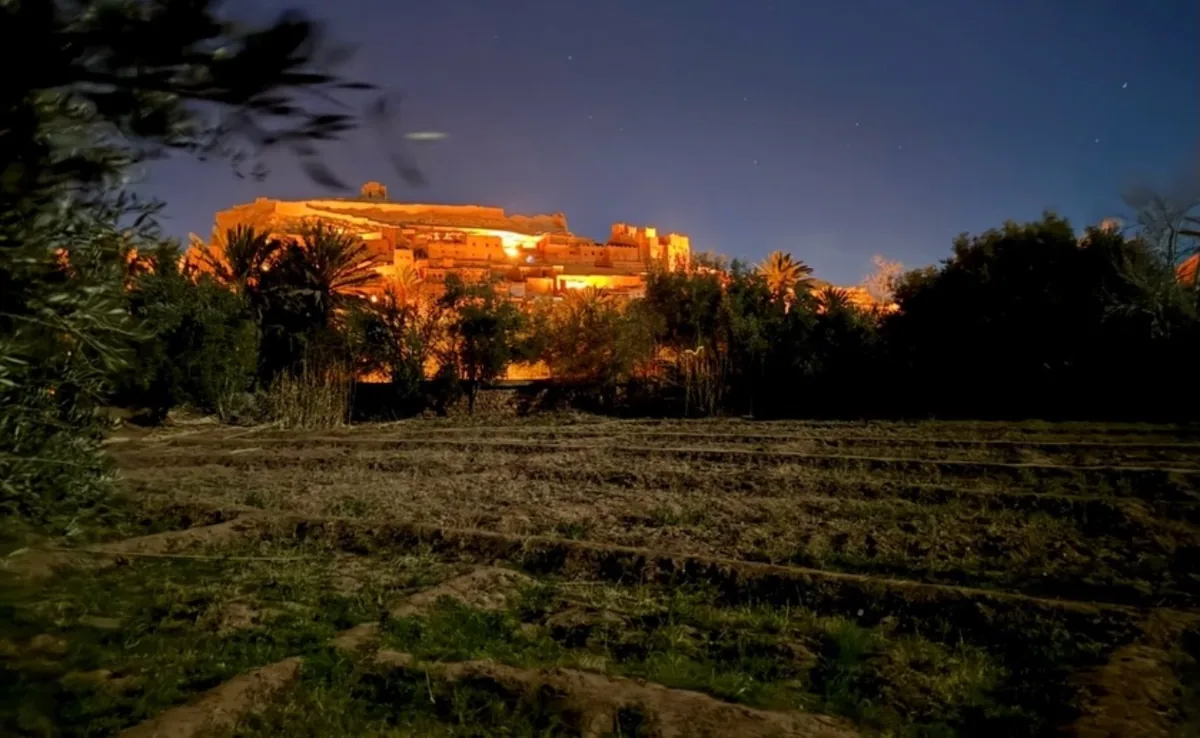
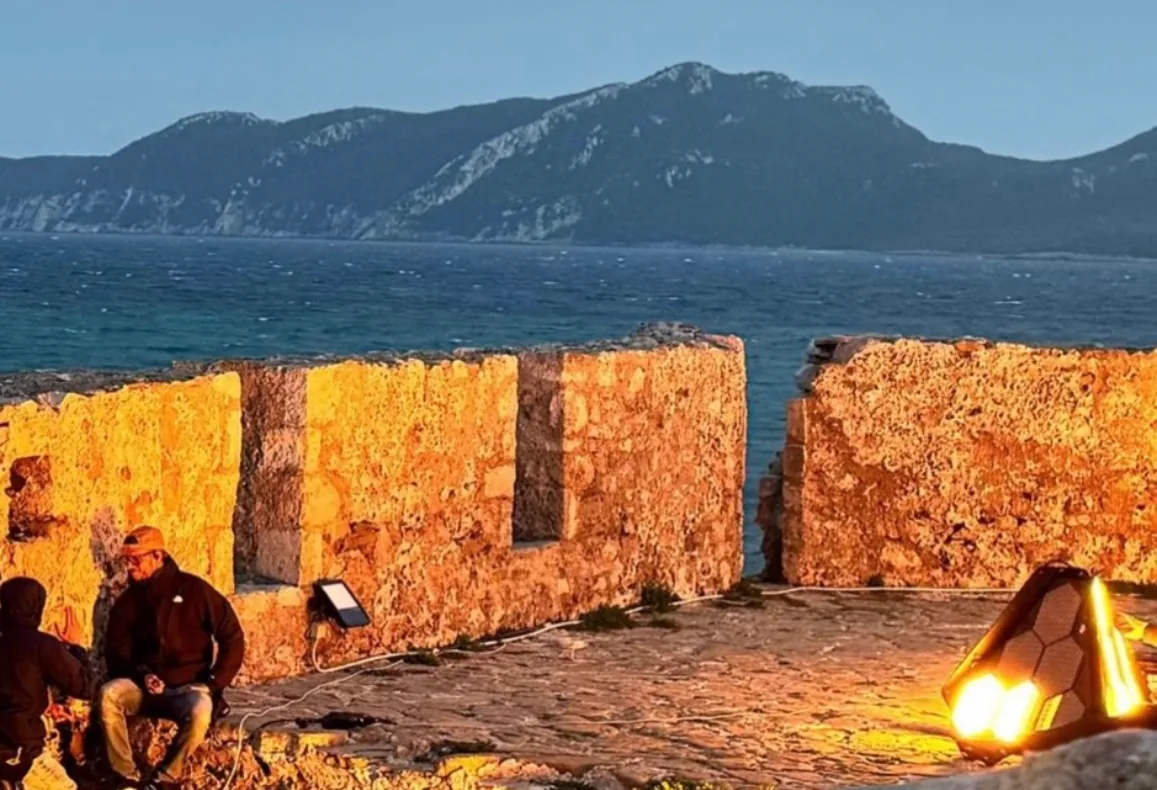
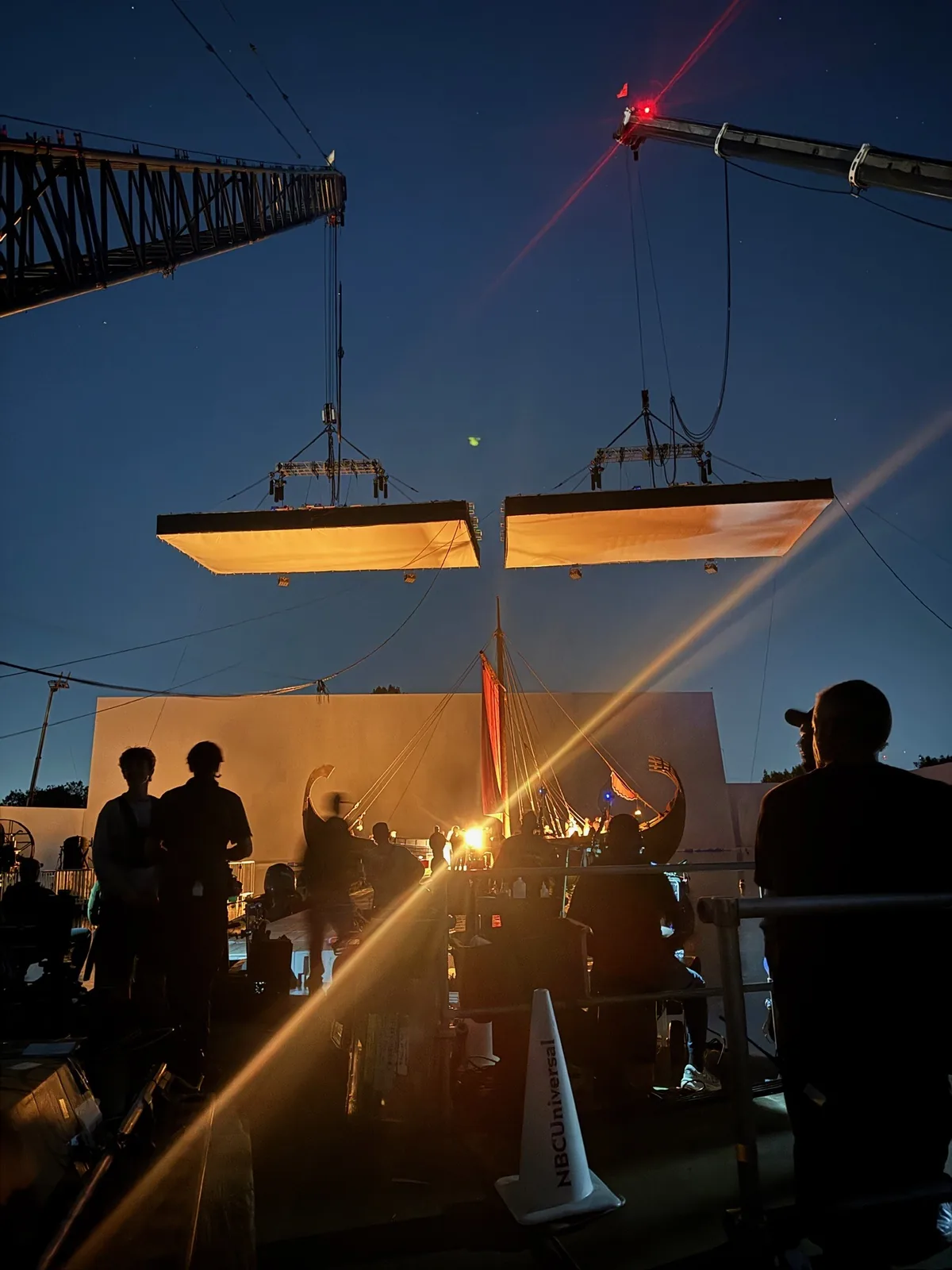
For me, the project also left personal memories: a tour of Universal Pictures with Hoyte, and a personal thank-you from Christopher Nolan to the Yuji teams. During the tour, our conversation went beyond the Pyrahedron—to light in cinema, the tools he wished he had, the capabilities and limitations of LEDs, and the role of CG.
Watching the film in IMAX 70mm brought that conversation into focus. The detail and scale of the firelight made me appreciate what it meant to have that light physically present on set: Hoyte could move through the scene, respond to the action and capture moments as they unfolded.
What stayed with me was Hoyte’s willingness to develop a new lighting instrument for a production of this scale, rather than let the available tools limit his vision. That ambition reaches beyond a single film: it challenges engineers to find new solutions and expands what filmmakers can achieve on set.
I am grateful to Hoyte van Hoytema, Christopher Nolan, Emma Thomas, Thomas Hayslip, Adam Chambers, Michael Lowrance, Noah Shain, Ramin Shakibaei, and the entire The Odyssey team. To Liao Zhang, Daniel Han and our colleagues at Yuji China and Yuji America: thank you for the work behind those forty days.
Later, reading Hoyte’s words in American Cinematographer brought those weeks back:
“We owe a major debt of gratitude to Liao Zhang and Timur Akhmetshin, our engineers at Yuji, who made this gigantic effort possible.”
— Hoyte van Hoytema, quoted in Iain Marcks’s “The Odyssey Delivers Adventure to the Max,” American Cinematographer, September 2026, p. 28.
On location