In architectural projects, lighting always involves many voices — architects, engineers, lighting designers, and manufacturers. Everyone has their own perspective on what “good light” means. To communicate effectively, we rely on common metrics: CCT (correlated color temperature), CRI (color rendering index), and lumens.
From “warm” and “cool” to precise specifications
Most people describe white light as simply “warm” or “cool.” In professional practice, that’s not enough — which is why we use Kelvins, such as 3000K, 4000K, or 6500K.
As project demands grew, CRI became the next go-to standard. A high CRI rating means colors look more natural under that light source. But here’s the catch: even CRI 90+ doesn’t guarantee that all fixtures in a project will look the same.
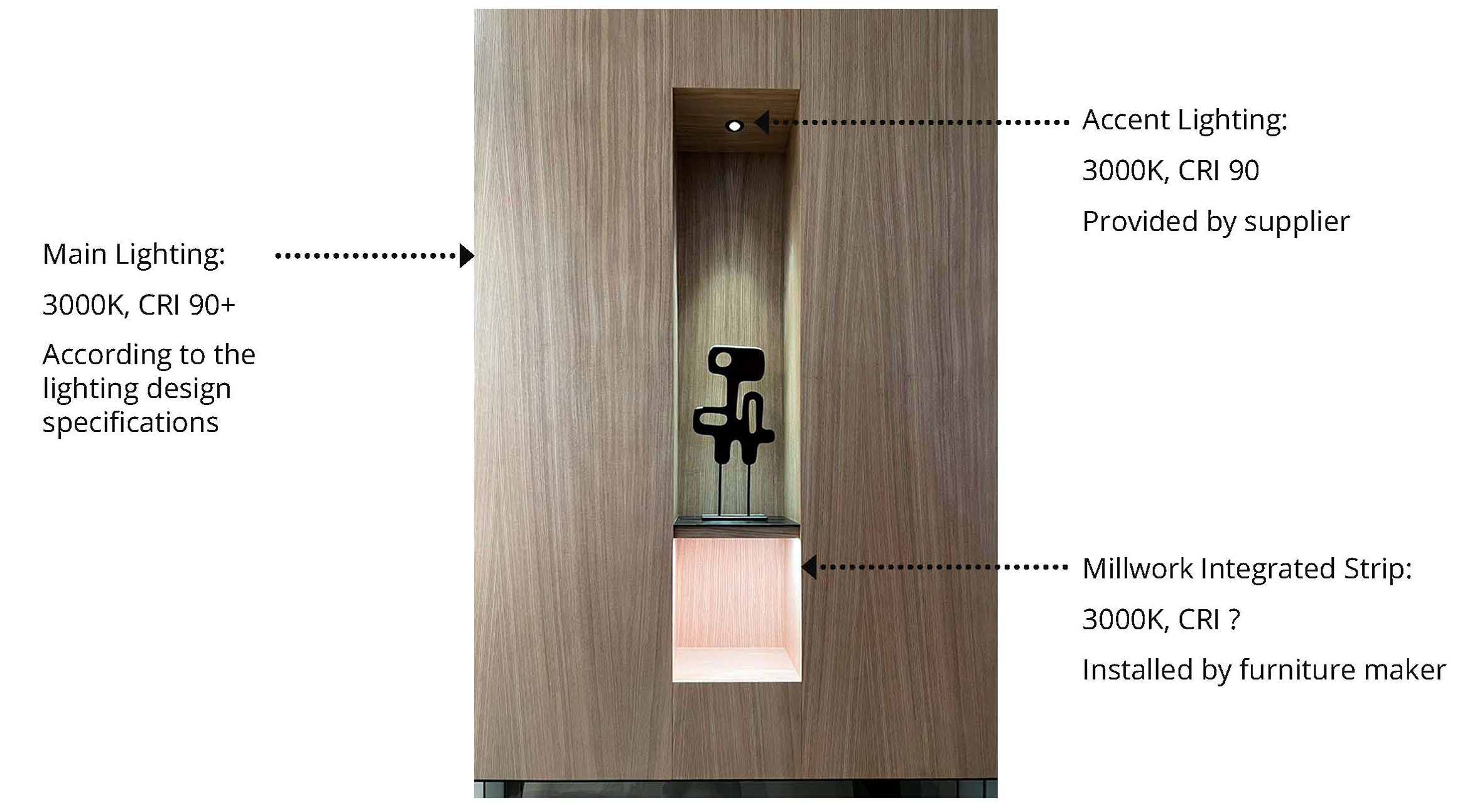
Millwork example — 3000K lights but different visual results:
Why “identical” fixtures don’t always match
Imagine you specify only 3000K fixtures with CRI 90+. Yet after installation, the space doesn’t feel cohesive — some luminaires look slightly green, others slightly pink. What happened?
The issue is that CCT and CRI alone don’t tell the whole story. What’s missing is a key parameter: Duv.
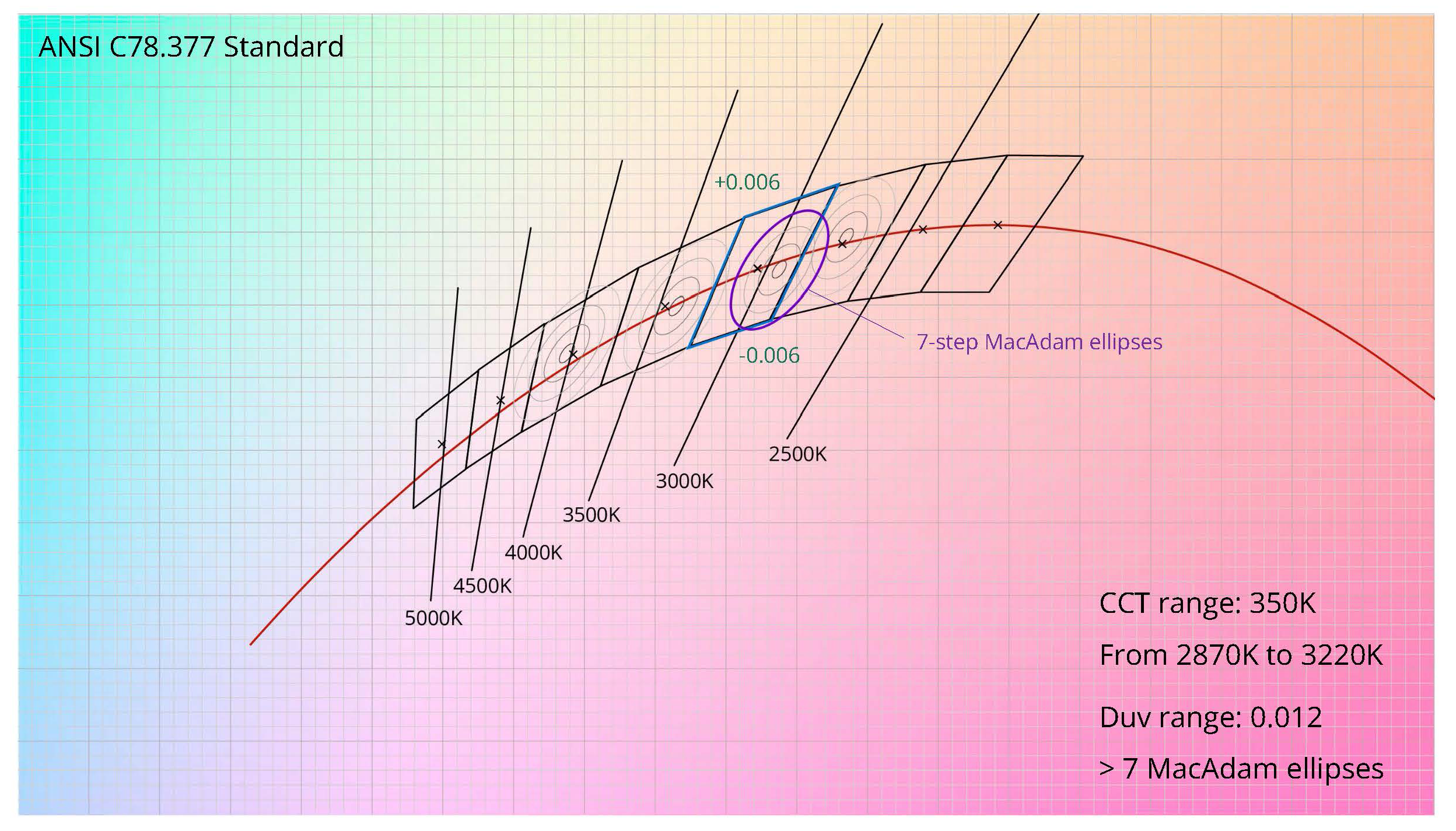
ANSI C78.377 diagram — CCT and Duv ranges:
What Duv actually is
Duv (Δu,v) measures the deviation of a light source from the blackbody locus on the CIE diagram. In simpler terms, it describes the tint of the light:
Positive Duv → a greenish cast
Negative Duv → a pinkish cast
Shelves photo: left greenish +Duv vs right pinkish –Duv:
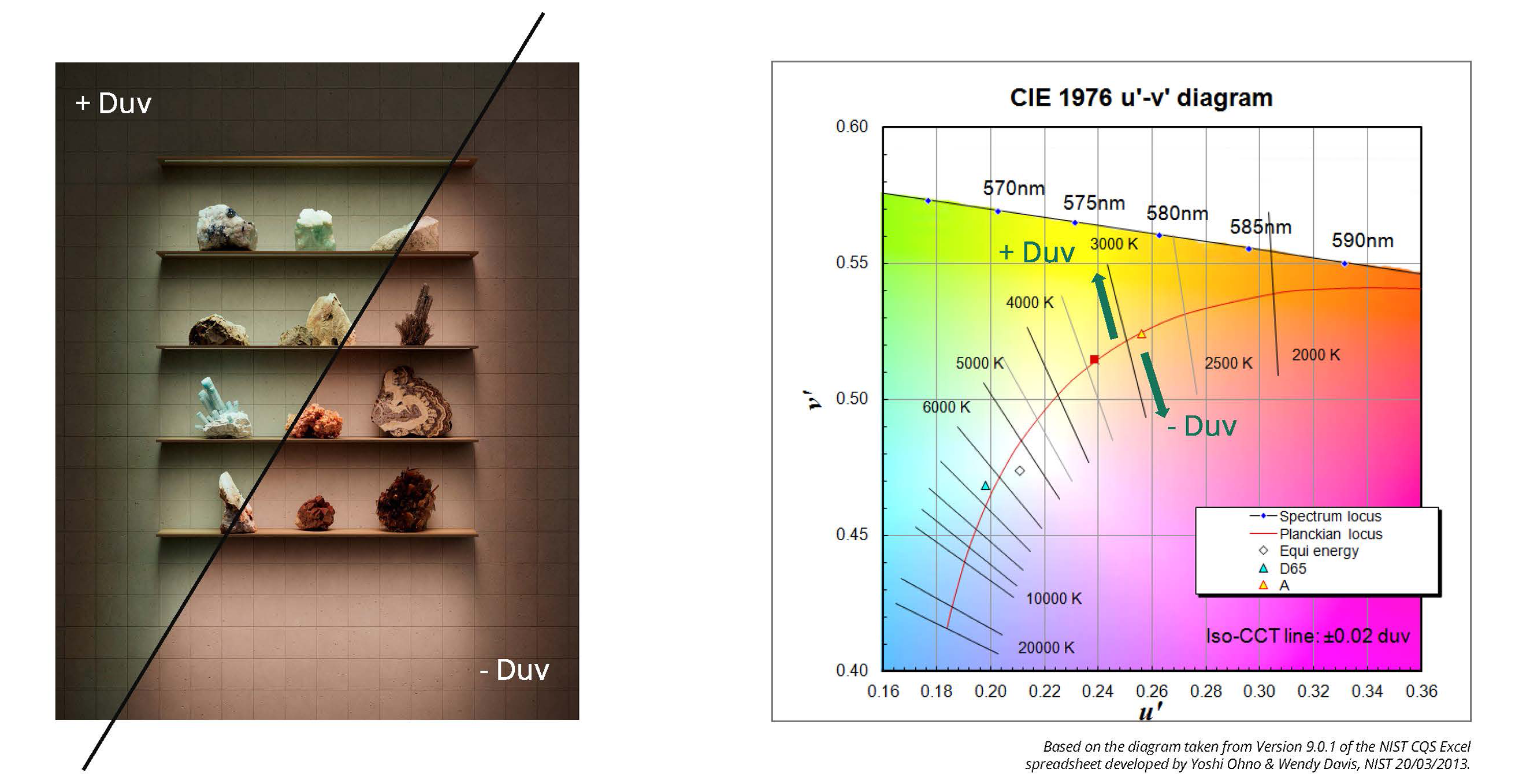
So even if two sources are both 3000K with CRI 90, different Duv values make them look noticeably different.
How to control color accuracy
Architectural projects often involve products from multiple manufacturers. Each supplier can rightfully claim their LEDs are “3000K” — but according to ANSI standards, that can mean anything from 2870K to 3220K, with a Duv tolerance of ±0.012. On paper, they’re the same. In reality, they look mismatched.
Сomparison of shelves under standard color range:
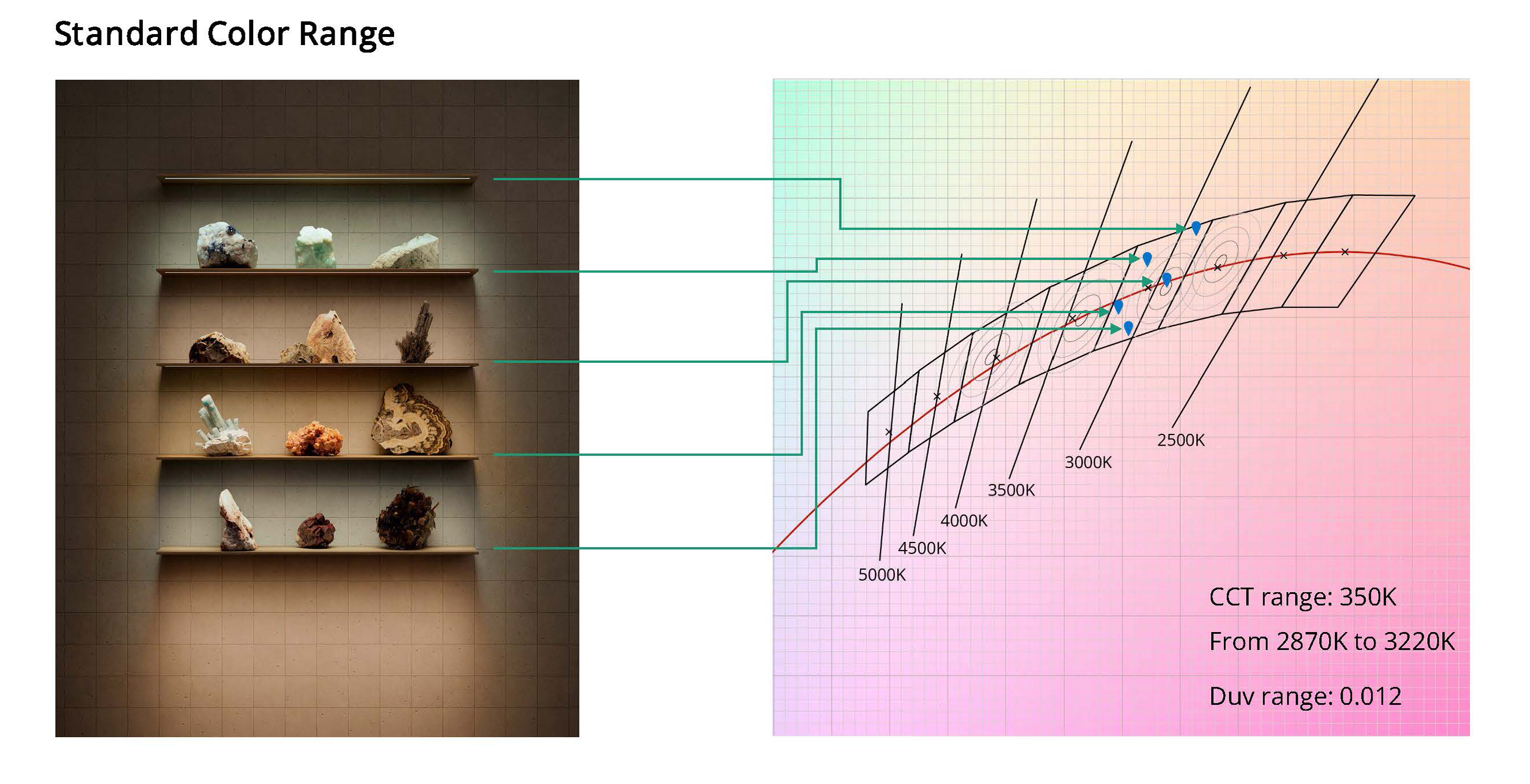
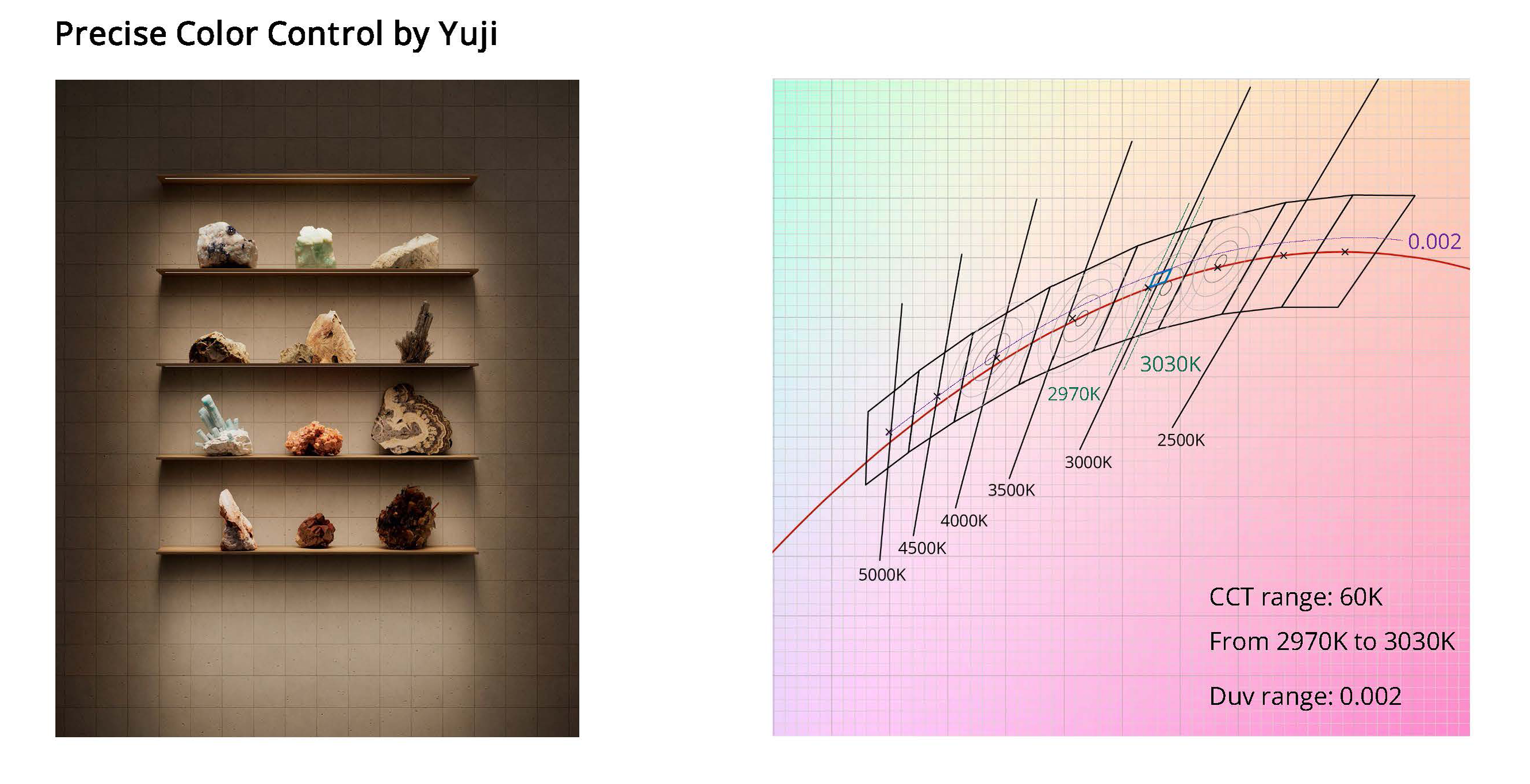
That’s why it’s critical to specify both CCT and Duv. For example: 3000K ±30K with a Duv range of 0 to +0.002. This level of control prevents color scatter and ensures a unified look across the project.
Precise Color Control by Yuji - narrow range 2970–3030K, Duv 0-0.002:
Real-world applications
Brand signage: By measuring how the diffuser shifted color, we engineered an LED that corrected the shift and reproduced the exact brand color.
Park projection lighting: For a source projecting up to 50 feet, we defined strict tolerances for CCT and Duv, tested existing inventory, and shipped only units that met those criteria.
High-end residential project: The client asked for ±100K and 0.002 tolerances. We delivered even tighter performance: ±50K and ±0.001.
Final thoughts
Color accuracy is about more than CRI. By controlling both CCT and Duv within narrow tolerances, you can create seamless, professional environments where light truly supports architecture. When color matches down to the details, the design speaks for itself.